RNOSC Strengthens Conflict Resolution Capacity Across National Sports Federations
The Rwanda National Olympic & Sports Committee (RNOSC), through its Conflict Resolution Committee, conducted a capacity-building workshop for members of Conflict Resolution Committees from National Sports Federations.
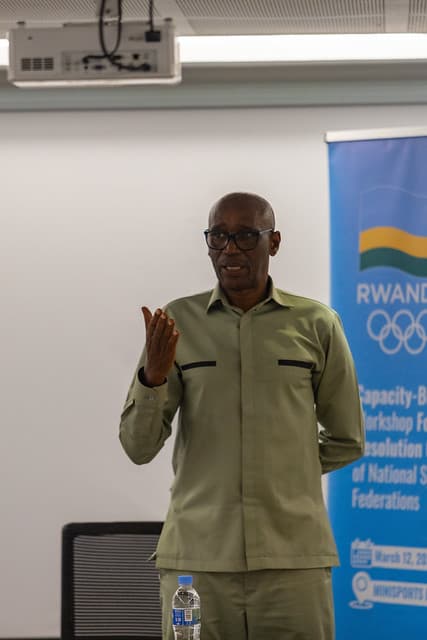
The Rwanda National Olympic & Sports Committee (RNOSC), through its Conflict Resolution Committee, today conducted a capacity-building workshop for members of Conflict Resolution Committees from National Sports Federations at the Ministry of Sports conference room.
The workshop brought together representatives from various federations to enhance their understanding of conflict management and equip them with the necessary tools to effectively address disputes within their respective organizations.
The session was facilitated by members of the RNOSC Conflict Resolution Committee, namely Kagarama Clementine, Rwabuhihi Innocent, and Nkurunziza Jean Pierre. Drawing from their expertise and experience, the facilitators guided participants through key topics related to conflict management in sports organizations.
Discussions focused on conflict prevention, conflict resolution mechanisms, the hierarchy of dispute resolution, and common challenges encountered by sports federations. Participants also exchanged experiences and explored practical approaches to managing disputes while fostering healthy working environments within their organizations.
Speaking at the closing of the workshop, RNOSC Secretary General Kajangwe Joseph underscored the importance of understanding and respecting the established hierarchy of reporting and conflict resolution.
"It is essential for conflict resolution committees to understand the proper hierarchy of reporting and conflict resolution mechanisms to avoid further conflict. Once you see that you might have a case of conflict, you do not need to jump straight to the Ministry of Sports or even the National Olympic Committee," he said.
He further emphasized the need for federations to exhaust internal mechanisms before escalating matters to higher authorities.
"We will also review the efforts made to resolve the matter internally. While resolving disputes remains important, our primary focus should always be on preventing conflicts before they arise," he added.
The workshop forms part of RNOSC's ongoing efforts to strengthen governance structures within Rwanda's sports movement. By empowering conflict resolution committees with the knowledge and skills necessary to address disputes effectively, the initiative seeks to promote transparency, accountability, and harmony across National Sports Federations.
As Rwanda's sports sector continues to grow, such capacity-building initiatives remain essential in ensuring that conflicts are managed professionally and constructively, ultimately contributing to the development and success of sport in the country.
Keep Reading
Explore more stories from Rwanda's Olympic journey